

Dental Service
Orthodontics
- Orthodontics is a specialty of dentistry that focuses on diagnosing, preventing, and correcting dental and jaw irregularities.
- It aims not only to improve the appearance of the smile but also to restore functional balance in chewing, speaking, and overall oral health.
- Crooked teeth, gaps, or misaligned jaws can cause both aesthetic concerns and functional problems.
- Orthodontic treatment ensures that teeth are properly aligned, providing long-term health benefits as well as an improved smile.
Important: Children should have their first orthodontic evaluation by the age of 6–7. Early diagnosis at this stage allows timely intervention and can reduce the need for more complex treatments later in life.
Good to know: Orthodontic treatment is not limited to children or teenagers. There is no upper age limit—adults of any age can benefit as long as their teeth and gums are healthy.
Why is Orthodontic Treatment Necessary?
- Corrects crowding, spacing, and bite problems (overbite, underbite, crossbite)
- Prevents premature wear of teeth caused by misalignment
- Reduces risk of gum disease and cavities by making oral hygiene easier
- Improves facial aesthetics and boosts self-confidence
- Supports proper speech and chewing function
Treatment Options in Orthodontics
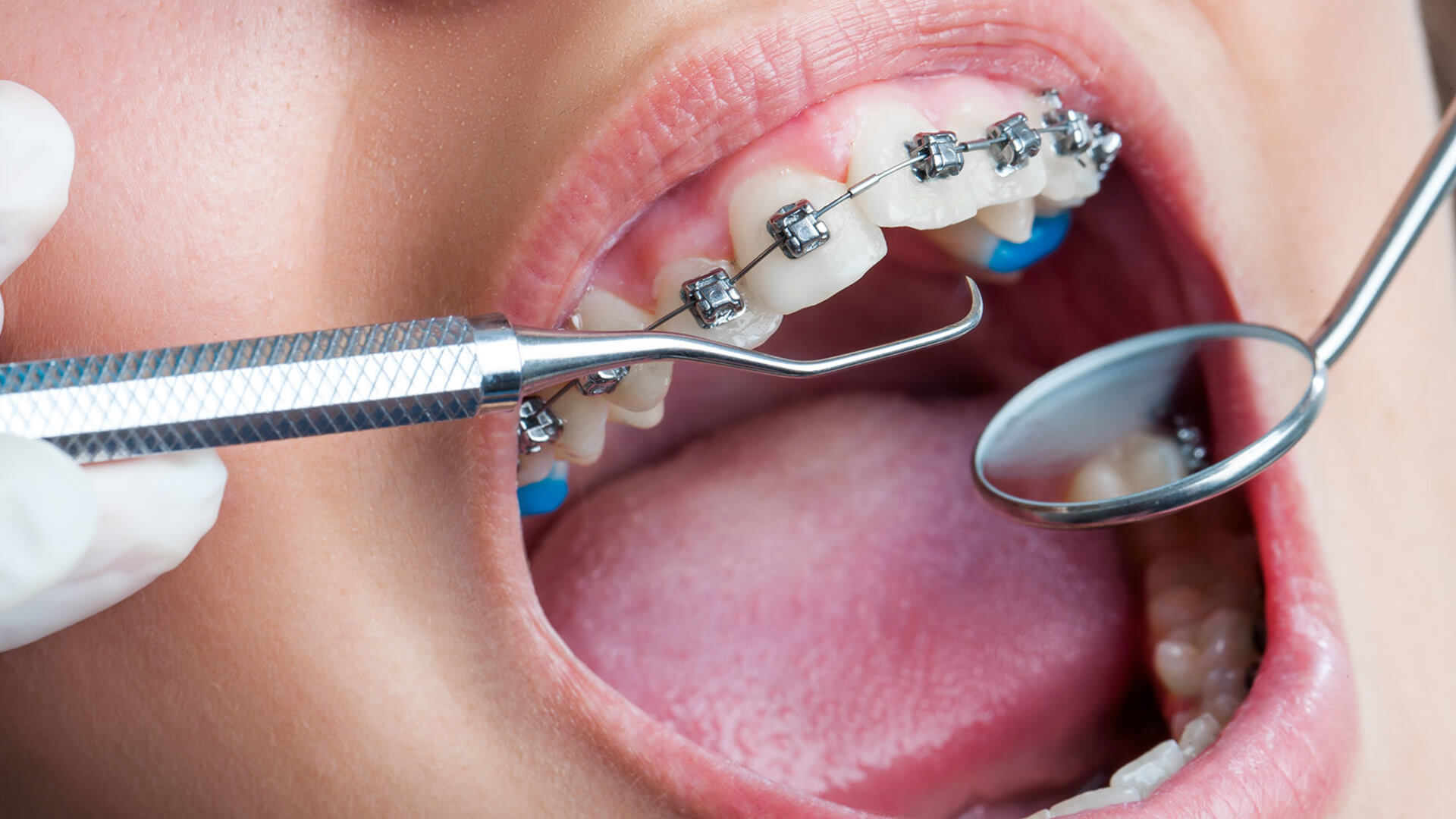
- Metal Brackets (Traditional Braces): Widely used and effective, offering precise control.
- Ceramic (Tooth-Colored) Brackets: An aesthetic alternative blending with natural teeth.
- Lingual Braces: Attached to inner surfaces of teeth, invisible from the outside.
- Clear Aligners (Transparent Plates): Removable, comfortable, and highly aesthetic while correcting misalignments.
The Orthodontic Process
- Examination & Diagnosis: Evaluation of teeth, jaws, and facial structure via clinical exam and imaging.
- Treatment Planning: A customized plan is prepared based on patient needs.
- Active Treatment: Braces or aligners are applied, with progress monitored in regular visits.
- Retention Phase: Retainers are used post-treatment to maintain stability.
Specialized Treatments: TMJ Disorders
The temporomandibular joint (TMJ) connects the lower jaw to the skull and allows chewing, speaking, and swallowing.
TMJ disorders can cause pain, limited movement, clicking, headaches, or neck pain.
Causes include:
- Teeth grinding (bruxism)
- Stress and muscle tension
- Malocclusion (misaligned bite)
- Trauma or injury
- Arthritis or degenerative conditions
Treatment approaches:
- Night guards or splints to protect the joint
- Orthodontic correction of bite problems
- Physical therapy and relaxation methods
- In advanced cases: minimally invasive procedures or surgery