

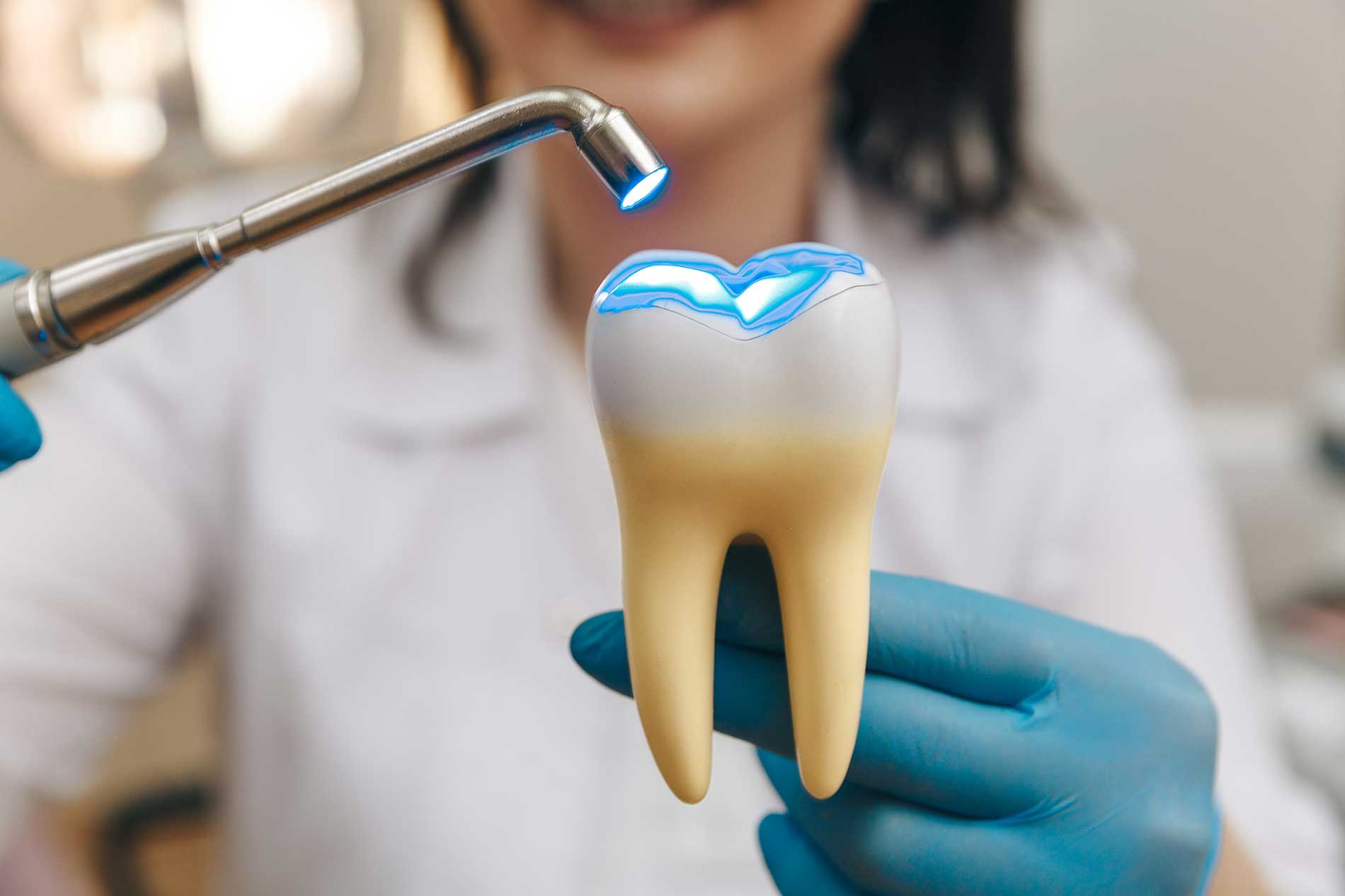
Tooth Filling
- This procedure is performed to repair decayed or broken teeth.
- The decayed portions of the tooth are removed and filled with a suitable filling material.
- There is usually no pain during the procedure; local anesthesia can be used.
- The duration may be short, but this is normal.
- With regular care, a filled tooth can be used healthily for many years.
Remember: Regular brushing, flossing, and routine checkups prolong the durability of fillings.
Dental Fillings
This procedure is performed to repair decayed or fractured teeth.
The damaged portions are removed and replaced with a suitable restorative material.
It is generally painless, with local anesthesia applied if necessary.
With proper care, a filled tooth can remain healthy and functional for many years.
Reminder: Regular brushing, flossing, and routine dental checkups extend the lifespan of fillings.
Why Are Fillings Necessary?
Tooth structure may be lost due to trauma or bacterial activity (decay). Such defects can be restored with
biocompatible materials to regain health, function, and aesthetics.
Cavities can also develop in areas not easily visible, which is why dental checkups every
six months are recommended for early detection and treatment.
Causes of Tooth Decay
- Bacteria in the mouth produce acids and toxins from food particles.
- Acids dissolve mineral tissues of teeth, causing cavities.
- Diets high in carbohydrates and sugar increase risk.
- Saliva offers natural protection but is not always sufficient.
- Diseases or medications reducing saliva flow promote decay.
Symptoms of Tooth Decay
Early-stage decay:
- Sensitivity to hot and cold
- Sensitivity to sweet foods
- Food impaction causing odor and pressure pain
Advanced-stage decay:
- Fractured teeth from extensive tissue loss
- Prolonged hot/cold sensitivity (>5 minutes)
- Night-time toothache
- Swelling inside or outside the mouth
👉 Mild sensitivity often indicates early decay, while persistent pain and swelling are signs of advanced decay.
In severe cases, the pulp is affected, requiring root canal therapy or surgical procedures.
How Is a Filling Done?
Modern fillings securely bond to teeth without excessive tissue removal. Only damaged tissue is cleaned,
and the filling restores natural shape and function.
In deep cavities, a calcium-based pulp capping material may be applied to stimulate dentin formation.
Types of Filling Materials
-
Amalgam Fillings (Silver): Durable and economical but not aesthetic.
Made of mercury + silver, tin, copper, zinc alloy. Slight expansion may cause microleakage over time. -
Composite Fillings (White/Resin): Applied in layers, hardened with light.
Aesthetic and natural-looking, precisely shaped after curing. -
Onlay/Inlay Fillings (Indirect): Custom-made in lab from gold, porcelain, or composite.
Provide excellent durability and aesthetics but require precision and special techniques.
Conclusion
Dental fillings are the most cost-effective and efficient way to restore teeth affected by decay or trauma.
Regular dental checkups every six months are essential for early diagnosis, timely treatment,
and prevention of more serious problems.